
Online Hours
Hours displayed in:Eastern Time (US & Canada)
MD/Ph.D. and Ph.D. Programs at the University of Pennsylvania Perelman School of Medicine
 11:00 AM - 1:00 PM
About
 |
University of Pennsylvania MD/PhD Program
Our Mission
Since it was founded in 1958, the mission of Penn's Medical Scientist Training Program program has been to prepare our students for careers as physician-investigators engaged in basic, disease-oriented and translational biomedical research designed to discover new knowledge and apply it for the betterment of humanity. We've accomplished that goal through the development of a well-integrated training program that combines the best medical training with outstanding graduate training leading to PhDs in traditional areas of biomedical laboratory research as well as in biomedical engineering, health care economics, anthropology, and history of science. Rather than producing confused graduates with two degrees and conflicting career options, our goal is to help our students fuse the different parts of their training together in ways that will bring a physician's perspective to the choices that they make as investigators.
How do we do it? Five features of the MSTP program at Penn
- Training: Help you learn the skills needed to be an outrageously successful physician-investigator.
- Faculty access: Help you take optimal advantage of the huge depth and breadth of research opportunities at Penn.
- Integration: Make Med School and Grad School work together for you.
- Guidance: Provide the advice, role models and mentoring that will help you prepare your future career.
- Community: Build a community to share the inevitable ups and downs along the way.
How have our graduates done?
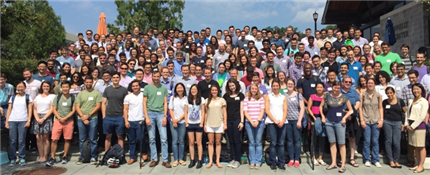
At the moment there are 192 students enrolled in the Penn MSTP program. Our large circle of alumni includes more than 500 graduates who have completed the program since 1958. To find out more about their careers and accomplishments, check out information on our alumni (https://www.med.upenn.edu/mstp/).
Biomedical Graduate Studies PhD Programs
Biomedical Graduate Studies (https://www.med.upenn.edu/bgs/) was established in 1985 and serves as the academic home within the University of Pennsylvania for roughly 700 students pursuing a PhD in the basic biomedical sciences. Although BGS is housed within the Perelman School of Medicine, it is composed of more than 600 faculty members across seven Penn schools and several associated institutes. BGS provides training and administration through seven graduate groups, some of which have distinct sub-specialty areas. Each graduate group has its own training mission, leadership, and staff, but there is often significant overlap among the groups in respect to faculty membership, courses offered, policies, and procedures. BGS provides centralized support to the graduate groups for admissions, student fellowships, curricular oversight, record-keeping, and other operations.
BGS students receive a full fellowship, which covers tuition, fees, health insurance, and an annual stipend of $31,000 in the 2016-2017 academic year. It will increase to $32,000 for the 2017-2018 academic year. Of the students who enrolled 10 years ago, 85% completed the PhD. Their average time to degree was 5.83 years.
- BGS Admissions overview: http://www.med.upenn.edu/bgs/applicants_phd.shtml
- BGS Admissions FAQ: http://www.med.upenn.edu/bgs/applicants_phd_faq.shtml
- Contact information for each BGS graduate group: https://www.med.upenn.edu/bgs/contacts.shtml
- BGS Admissions Blog (to which applicants may post questions and read answers to questions other applicants have asked): http://pennbgs.tumblr.com/